
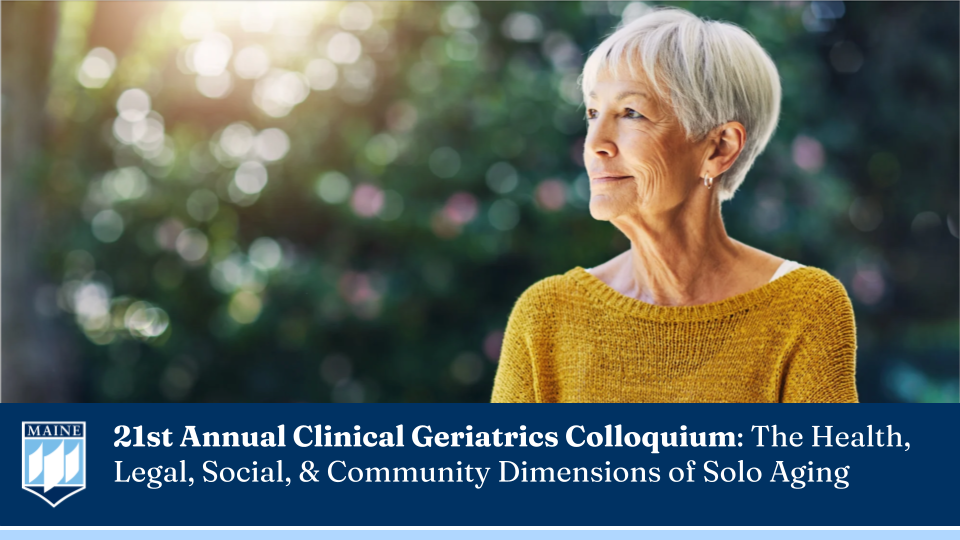
UMaine Center on Aging Reflects on the 21st Annual Clinical Geriatrics Colloquium
On October 21, 2026, the University of Maine Center on Aging hosted its 21st Annual Clinical Geriatrics Colloquium, bringing together older adults, researchers, healthcare professionals, and community members to explore The Health, Legal, Social, and Community Dimensions of Solo Aging.
The virtual event welcomed 92 attendees, reflecting strong interest in understanding and addressing the unique experiences of older adults aging without traditional family or caregiving support systems.
The day began with presentations from Mara Getz Sheftel, Ph.D., of Rutgers University, and Ashton M. Verdery, Ph.D., of Pennsylvania State University, who examined the relationships between solo aging, social isolation, loneliness, and limited social networks.
One of the day’s highlights was the Solo Agers: In Their Own Voice panel, facilitated by Elizabeth Gattine. The discussion brought together five individuals who shared their personal experiences and perspectives on navigating later life as solo agers.
Afternoon breakout sessions explored the legal considerations of solo aging, the experiences of individuals with developmental disabilities, the role of artificial intelligence and emerging technologies, and challenges encountered in clinical healthcare settings.
The afternoon continued with a Solo Aging Innovators panel featuring Linda Camp, Wendl Kornfeld, and Ailene Gerhardt, who discussed approaches to planning, building support networks, and strengthening community connections. Karl Pillemer, Ph.D., of Cornell University concluded the featured presentations with a discussion on family estrangement and reconciliation.
The colloquium closed with remarks from Patricia Oh, Assistant Director for Community Innovation and Research at the Center on Aging, highlighting new avenues for supporting solo agers through age-friendly communities.
The Center on Aging extends its sincere appreciation to all presenters, panelists, participants, and staff who contributed to this year’s event. Their participation helped foster meaningful conversations about the importance of research, planning, and community-based approaches to supporting older adults.
As the Center looks ahead to future programming, the insights and conversations from this year’s colloquium will continue to inform efforts to support healthy aging and strengthen communities throughout Maine.
Thank you to everyone who helped make the 21st Annual Clinical Geriatrics Colloquium possible!